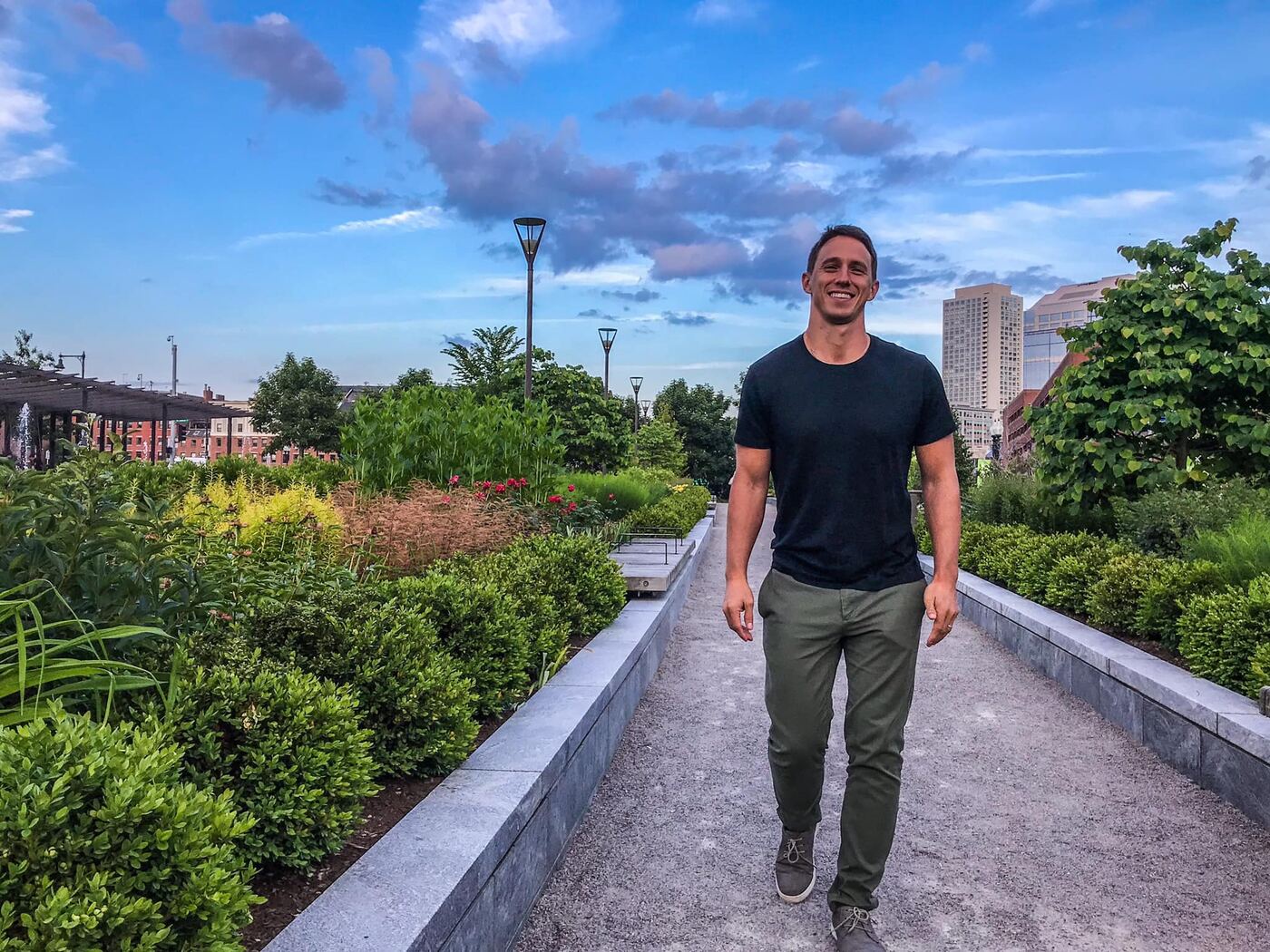
Have you already started the midnight Zillow scroll? Opened a map of a city you've maybe visited twice and started imagining a life in it — which street, which coffee shop, whether the dog would like it? If you're here, on a page called "moving to Asheville," I'm guessing the answer is yes, and I'm guessing you haven't fully admitted that to the people around you yet either.
I'm not going to give you a listicle. You've read those — I've written some of those, if we're being honest, and they're fine for a plane ride, but they don't actually tell you what it's like to uproot a life and set it back down somewhere you've only visited. So instead, this is the long version. The one I'd give a friend who called me and said, "okay, be honest with me."
The feeling I couldn't name
I did my PhD at the University of Florida — nutritional sciences, studying how diet can treat epilepsy in kids. Gainesville summers are a specific kind of relentless: the air is a wet towel over your whole body by 9am, hurricane season is a background hum from June through November, and every year the strip malls multiply a little and the woods shrink a little. I didn't hate it. I want to be clear about that, because I think a lot of people leaving Florida feel like they're supposed to have a grievance, and mostly it's just... a feeling. A low-grade sense that the place isn't asking anything of you, and you're not asking anything of it.
From there I went to Harvard, for a postdoc in public health, and traded the heat for Boston winters and a career that looked, on paper, exactly like the one I was "supposed" to want. And it still wasn't it. Have you had that feeling — that a place can be fine, even good, and still not be yours?
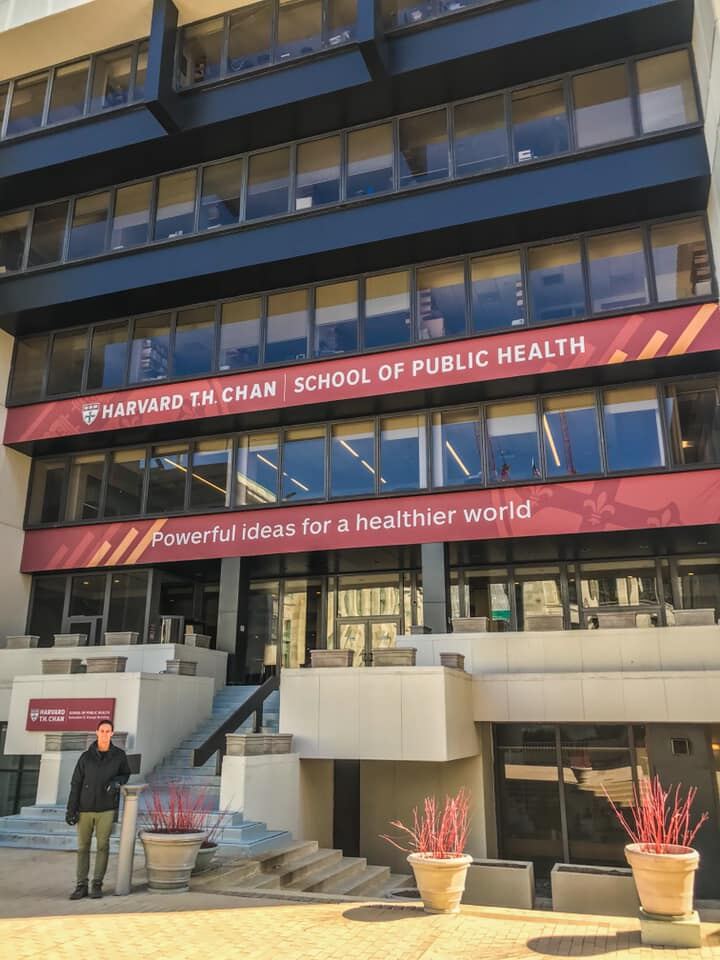
Harvard T.H. Chan School of Public Health. The career I was "supposed" to want.
I moved to Asheville in October 2019 without fully knowing why, other than that I wanted the walkability and culture of a real city with room to actually breathe. I started in West Asheville, where I could open my front door and run to the river without a plan.
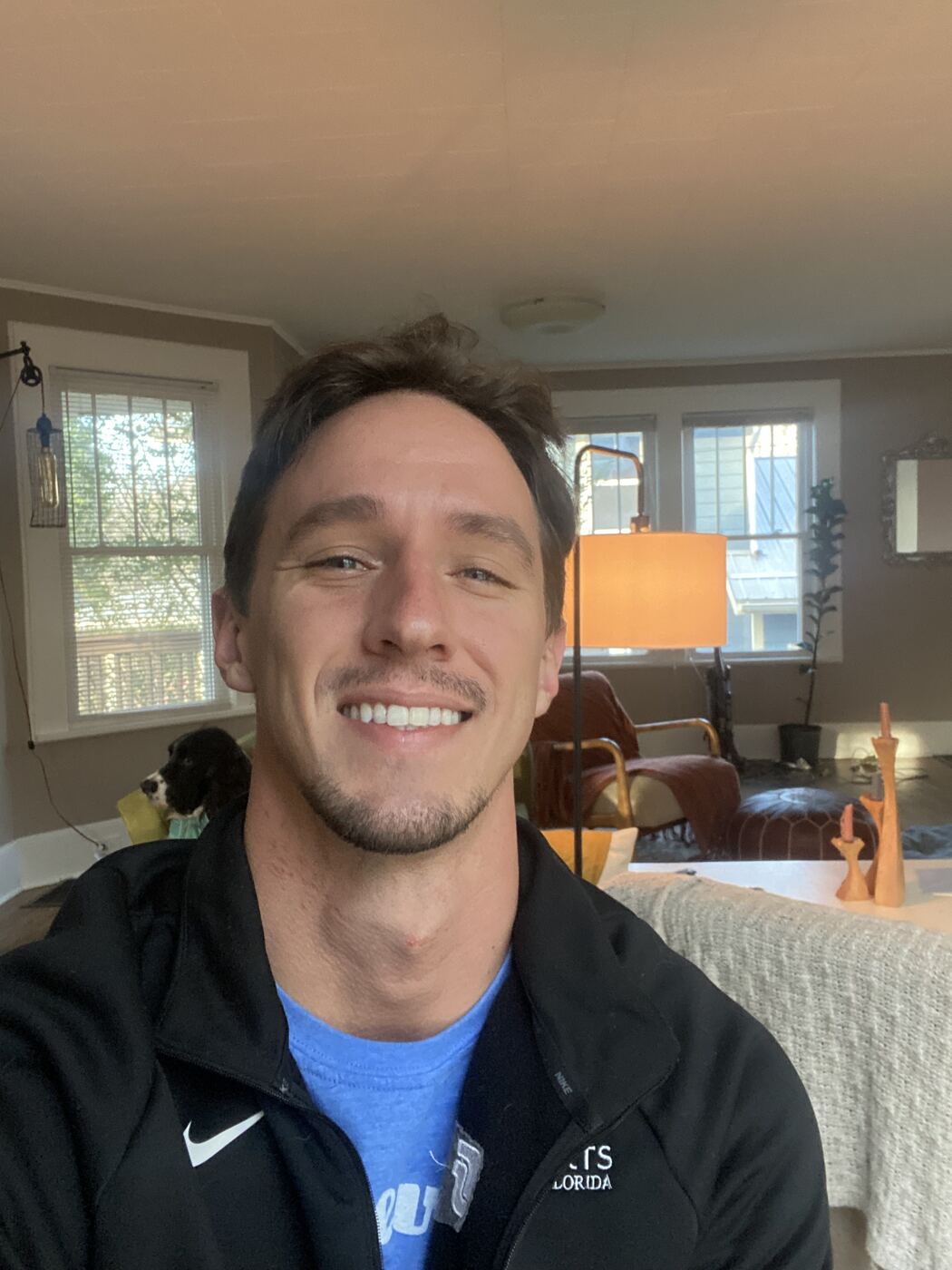
Move-in day at the first West Asheville place. Old habits — still a Florida jacket.
I've since lived in South Asheville and East Asheville too — I've felt this city from the inside, not just looked at it on a map. I still catch myself pulling out of a parking lot with the Blue Ridge sitting right there behind the buildings, and it still gets me. Every season, it hits differently.
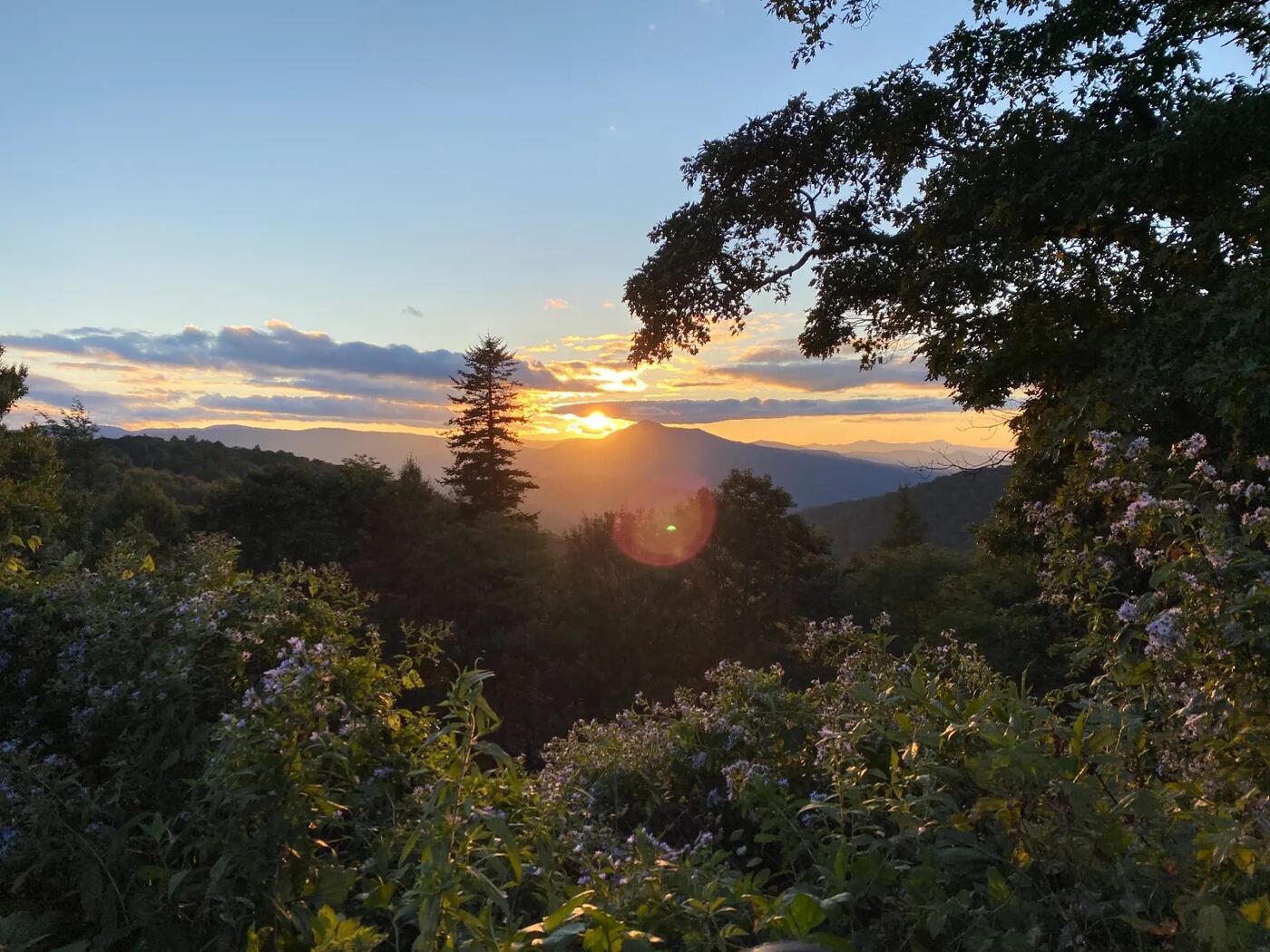
A drive on the Parkway. This is the thing I mean.
I tell you all of that not because your story needs to match mine — it won't — but because I think the real question underneath "should I move to Asheville" is never really about Asheville. It's the Gainesville question, or the Boston question, or the Charlotte or Tampa or DC question: could you see yourself somewhere that actually asks something of you back? That's the conversation worth having before we ever talk about square footage.
What it actually costs
I'm not going to hand you a national cost-of-living index and call it a day — those numbers are stale the moment they're published, and they never account for the specific street you're comparing. What I can tell you, honestly, from doing this work since 2016:
- Housing is not cheap, and it's not going to feel cheap coming from most places either. Demand has stayed strong across price points, and the $600K–$1.2M range is where I see the most competition — especially anything with a mountain view or a short walk to downtown. There are pockets of real value if you're willing to trade proximity for space: Black Mountain, parts of Haw Creek, areas further into Buncombe, Henderson, and Haywood counties.
- North Carolina has a state income tax — worth saying plainly if you're coming from Florida or Texas, where you're used to having none. Property taxes here run relatively moderate compared to a lot of the country, which softens that some.
- Homeowners insurance is its own conversation right now, especially post-Helene — more on that below. It's not the hurricane-coast pricing you may be used to from Florida, but it's not what it was five years ago either, and I'd rather you hear that from me than get surprised by a quote.
Here's the honest version: I could give you a number, and it would be wrong for your specific situation within a month. What I can actually do is pull real comps for the neighborhoods you're considering and tell you what things are closing for right now — not what a blog post said in 2023.
If you want to see what a specific price actually costs each month, Asheville Move Math uses Buncombe County's and the City of Asheville's current tax rates and lets you drop in real insurance quotes.
Can you actually work here?
Asheville's job market is real, but it's not Charlotte's, and it's definitely not the Bay Area's or DC's. Tourism, healthcare, and a genuinely strong small-business and maker culture are the backbone of it — it is not, and probably won't become, a corporate hub. If you're coming with a specific in-office role in a field that isn't well represented here, plan to have that sorted before you move, not after.
Where Asheville has quietly become a great fit is remote work. A meaningful share of the people I help relocate here are keeping a job based in a bigger city and bringing it with them — which, if that's your situation too, changes this whole conversation. You get to choose a neighborhood based on how you want to live instead of a commute you don't have anymore.
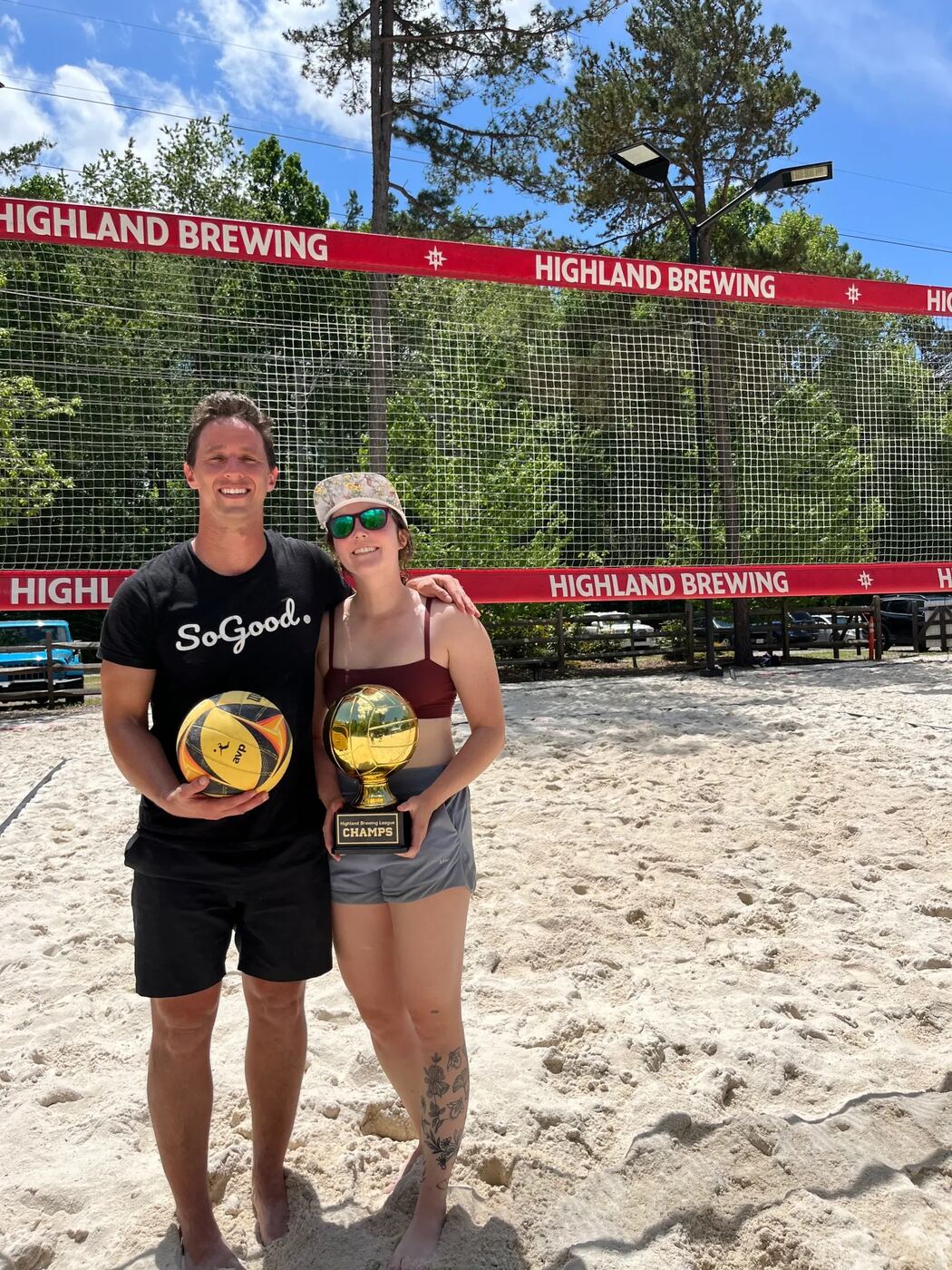
Thursday nights, Highland Brewing. This is the "life" part of the job market question.
Let's talk about Helene, honestly
I'm not going to bury this in a footnote, and I'm not going to pretend it didn't happen. In September 2024, Hurricane Helene brought catastrophic flooding to Western North Carolina. The River Arts District and other low-lying areas along the French Broad River were hit hard, the city's water system was out for weeks, and the recovery — physically and emotionally — has shaped this region since. If you've seen the news coverage and it gave you pause, that's a completely reasonable reaction, not an overreaction.
Here's the fuller picture, though: most of Asheville and Buncombe County sits well above the river's flood plain and wasn't directly hit the way the RAD corridor was. The city functions normally day to day. Rebuilding in the hardest-hit pockets is visibly, actively underway, not abandoned. What I won't do is tell you in the abstract that "Asheville is fine now" — that's a real estate agent smoothing over something that deserves a real answer. What I will do is pull FEMA flood maps and elevation data for any specific address you're looking at, and tell you honestly what I see, the same way I do on the River Arts District guide. That's not a sales pitch — that's the actual job.
If you'd rather run the check yourself first, I put my whole process into a free, printable Western NC pre-purchase risk checklist: flood, slope, insurance, roads, water, and how North Carolina due diligence works.

The RAD's gallery scene — still very much alive. Not evidence of anything except that it's worth seeing for yourself.
Nine neighborhoods, nine different lives
Asheville isn't one place — it's a dozen small ones stitched together, and where you land changes what your Tuesday actually feels like more than almost any other decision in this process. I've lived in three of them myself, and I've written an honest, specific read on nine more, including what I'd flag before you write an offer in each one.

Wesley's walked every street in West, South, and East Asheville. He's a good judge of a neighborhood.
Schools, if that's part of your Tuesday
If you're moving with kids, the short version: you'll be choosing between Asheville City Schools and Buncombe County Schools depending on exactly where you land, plus a handful of well-regarded charter and private options. Both public systems are smaller and more community-focused than what you may be used to in a bigger metro — that's a real trade-off some families love and others don't. This is exactly the kind of thing that's genuinely better as a conversation than a paragraph, because the right district for your kid depends on the kid, not just the map.
How this actually works if you're not here yet
This is the part people worry about most and ask me about least, so let me just lay it out. You do not need to already live in Asheville, or have visited five times, or have it all figured out before we start.
- We talk first. Not about bed/bath counts — about what you actually need a place to feel like. This is the same conversation I have with every buyer, local or not.
- I build you a real, curated list — not a flood of every MLS listing, but the ones that actually match, including off-market opportunities when I have them.
- I walk properties for you when you can't be here — live video, honest narration, the stuff photos don't show.
- You come for one focused trip once we've narrowed it down, so the visit is about writing an offer, not starting from zero.
- Closing happens remotely — e-signature, wire instructions handled carefully, a lender who's used to out-of-state buyers. I've closed deals for clients who never set foot in the house until they picked up the keys.

Where I actually get coffee. Ask me and I'll tell you.